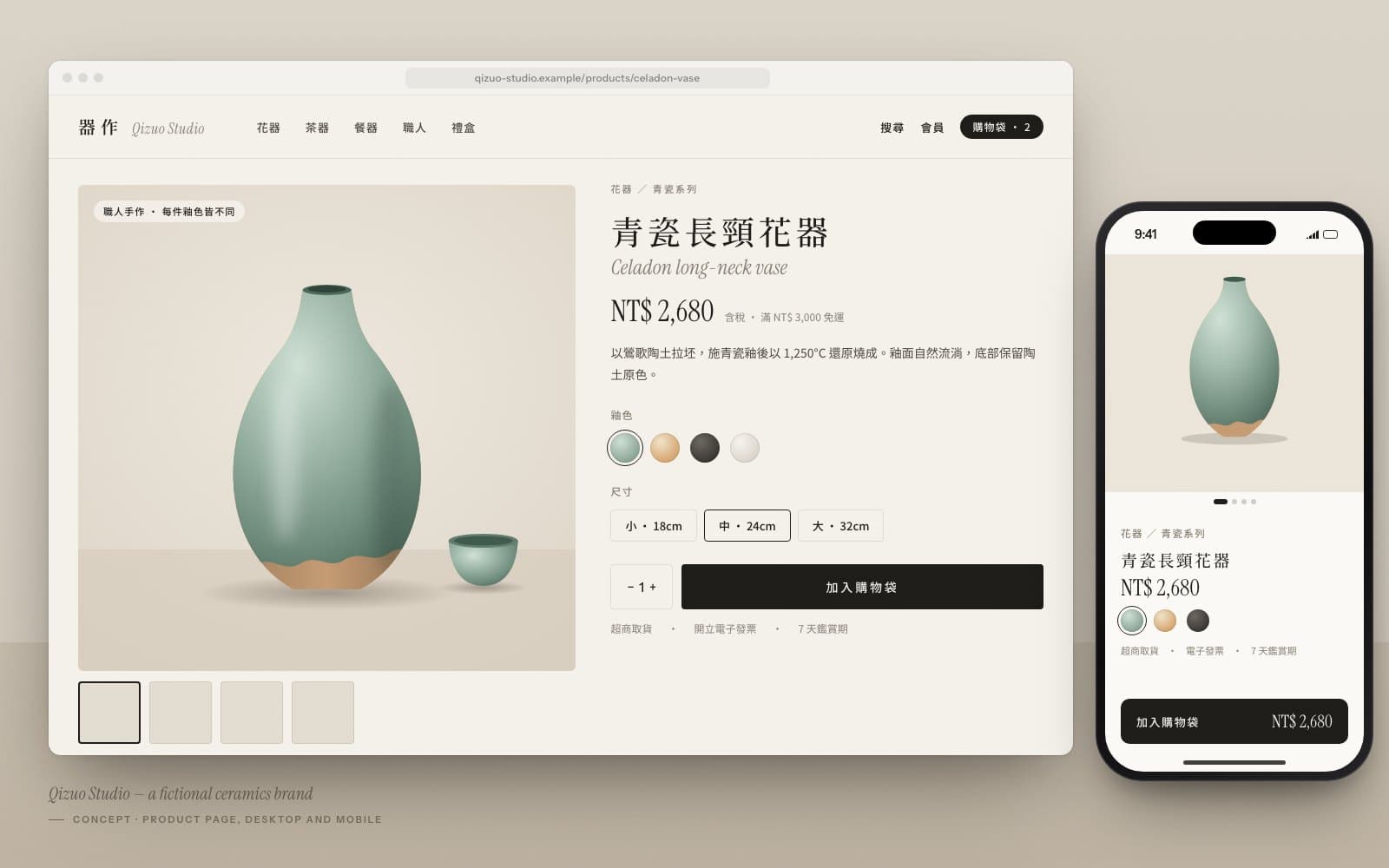
品牌電商旗艦店Brand flagship online store
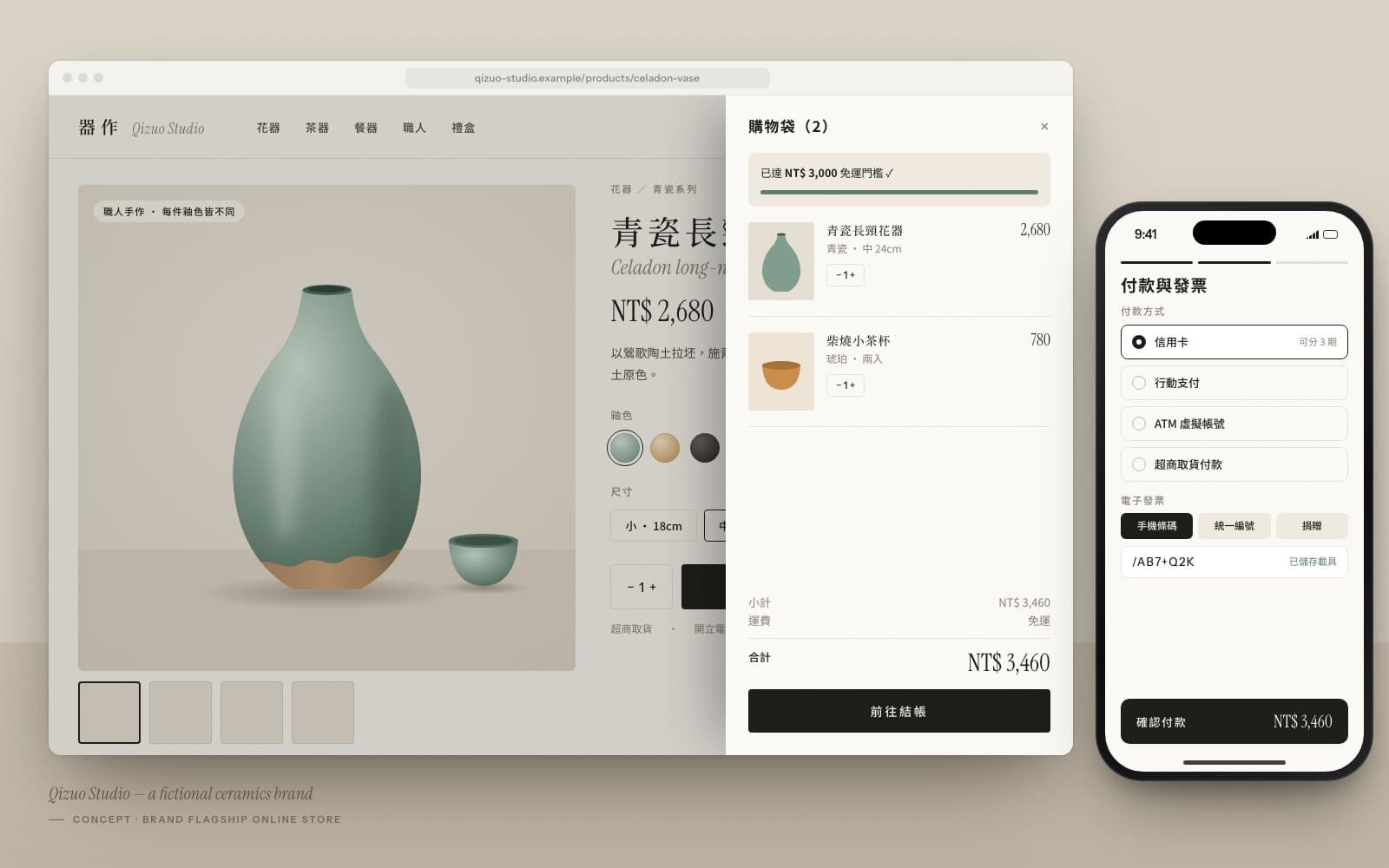
為虛構的陶藝品牌「器作」設計的電商旗艦店概念,展示商品頁、購物袋抽屜,以及符合台灣習慣的結帳流程:多元付款與電子發票載具。
A flagship online store concept for Qizuo, a fictional ceramics brand: a product page, a cart drawer and a checkout built for Taiwan, with local payment options and e-invoice carriers.
此為概念設計,用於展示我們的設計與開發能力,並非真實客戶案例。
This is a concept design that demonstrates our design and development capabilities; it is not a real client project.
品牌商品放在大型電商平台上,往往只能套用制式版面,難以呈現材質與工藝;自建網站又常在結帳時缺少台灣消費者熟悉的付款與發票選項。
這個概念以大面積留白和商品主圖呈現釉色與質感,選擇釉色、尺寸時圖片與價格即時更新。購物袋以側邊抽屜開啟並顯示免運門檻,結帳頁整合信用卡分期、行動支付、ATM 虛擬帳號、超商取貨付款,以及手機條碼載具、統一編號與捐贈發票。
如果實際開發,我們會以 Next.js 打造前台,Payload CMS 管理商品、庫存與品牌內容,並串接台灣的金流服務與電子發票加值服務中心,讓訂單、付款與發票在同一個流程中完成。
On large marketplaces, brand products are squeezed into a standard template that hides materials and craft. Brand-owned stores, on the other hand, often lack the payment and invoice options Taiwanese shoppers expect at checkout.
This concept uses generous white space and a large product image to show glaze and texture; choosing a glaze or size updates the image and price instantly. The cart opens as a side drawer with a free-shipping progress bar, and checkout brings together card instalments, mobile payment, ATM virtual accounts and cash on pickup at convenience stores, plus mobile-barcode e-invoice carriers, company tax IDs and invoice donation.
In a real build we would use Next.js for the storefront and Payload CMS for products, stock and brand content, connected to Taiwanese payment providers and an e-invoice value-added service, so order, payment and invoice happen in one flow.