生成式 AI 客服真實案例:AI 怎麼回覆客戶、何時該轉真人Generative AI customer service: real cases, and when to hand off to a human
從 Klarna、Air Canada、Intercom 到台灣大哥大,整理生成式 AI 客服的成功與教訓,以及中小企業該讓 AI 回答什麼、何時轉真人、上線後看哪些指標。
Klarna, Air Canada, Intercom and Taiwan Mobile: what real AI support deployments teach about what AI should answer, when to hand off, and what to measure.
生成式 AI 讓客服機器人終於「聽得懂人話」,不少老闆開始考慮讓 AI 先接住客戶的訊息。但 AI 客服做得好,可以省下大量重複工作;做得不好,一句錯誤的回答就可能變成退款、客訴,甚至被告。這篇文章整理四個有公開紀錄的案例,有成功也有教訓,再把它們轉成中小企業可以照著做的原則:哪些問題交給 AI、什麼時候一定要轉真人,以及上線後該看哪些數字。
Klarna:亮眼數字之後,重新強調真人
以下為公開報導或官方發布的案例,並非源泉科技的客戶,內容依據文末參考資料整理。
瑞典支付公司 Klarna 在 2024 年 2 月發布新聞稿,宣布以 OpenAI 技術打造的 AI 助理上線一個月,就處理了 230 萬次對話,約占客服聊天的三分之二,工作量相當於 700 名全職客服。官方同時表示,客戶滿意度與真人客服相當,重複詢問減少 25%,解決問題的時間從約 11 分鐘縮短到 2 分鐘以內,並支援 35 種以上語言。值得注意的是,新聞稿也寫明客戶仍可選擇改找真人客服。
後續發展更值得參考。根據 TechCrunch 2025 年 6 月的報導,Klarna 執行長在倫敦 SXSW 表示,AI 可以接手枯燥的例行工作,但公司仍要向客戶承諾「人的連結」,並把真人客服定位成更高等級的服務。CX Dive 在 2026 年 2 月的報導則提到,執行長坦承公司先前太看重成本,因此自 2025 年 5 月起重新招募真人客服。
我們的解讀是:AI 確實能大量處理簡單問題,但「省多少人力」不該是唯一的評估標準。客戶隨時能找到真人,是服務品質的底線。
Air Canada:機器人說錯,公司要負責
2022 年 11 月,一位加拿大旅客在祖母過世當天上 Air Canada 官網,詢問網站上的聊天機器人關於喪親優惠票價的規定。機器人回答,可以先以一般票價購票,再於開票後 90 天內申請優惠退款。旅客照做了,申請時卻被告知喪親票價不適用於已完成的旅程,而正確規定其實寫在官網的另一個頁面。
卑詩省民事糾紛審裁處(Civil Resolution Tribunal)在 2024 年 2 月作出裁決(Moffatt v. Air Canada, 2024 BCCRT 149)。Air Canada 的論點等於主張聊天機器人應為自己提供的資訊負責,審裁員直言這是「令人驚訝的主張」(a remarkable submission):聊天機器人就是官網的一部分,公司要對網站上的所有資訊負責,不論來自靜態頁面還是機器人。審裁員也認為,客戶沒有理由知道同一個網站裡哪一部分才正確。最後判定 Air Canada 構成過失不實陳述,須支付差價、利息與規費共 812.02 加幣。
金額不大,教訓卻很清楚:AI 對客戶說出的話,法律上很可能被視為公司的說法。涉及退款、價格與規定的問題,不能讓 AI 自由發揮。
Intercom Fin:用自家知識庫回答
客服軟體公司 Intercom 推出的 AI 客服 Fin,底層使用 Anthropic 的 Claude 模型。根據 Anthropic 官網的客戶案例(2026 年 10 月查閱),Fin 依據企業自己的知識庫回答問題,配合各家的語氣與政策,廠商表示目標是讓 Fin 能處理退款等操作;頁面列出最高可解決 86% 客服量、客戶群平均「開箱即用」解決率 51% 等數字。
這些是廠商自行公布的數據,定義與計算方式未必和你的情境相同,參考就好。但其中一個差距很有意思:同一套產品,不同企業的解決率可以差很多,關鍵往往在於知識庫整理得好不好、規則寫得清不清楚。
台灣大哥大:先找知識點,再讓模型回答
台灣的例子可以看台灣大哥大。依 iThome 2023 年 10 月的報導,台灣大的智能客服機器人「小麥」平均每月回覆約 42 萬次提問,滿意度約 95%,同時仍有約 1,500 位真人客服提供全天候服務。
報導中最有參考價值的是他們的做法調整。團隊一開始把企業資料丟給語言模型直接回答,結果模型容易生出錯誤答案,因為企業資料在模型的訓練資料中占比極低。後來改成先把知識點資料庫轉成向量,用模型理解客戶的問題後,找出信度最高的既有答案來回覆,而不是任意生成。台灣大表示,改良後對艱澀問題的回答正確率提高約 3 倍。
哪些問題可以交給 AI
綜合上面的案例,AI 最適合回答「答案已經寫在你資料裡」的問題:
- 營業資訊:營業時間、地址、交通、停車、聯絡方式。
- 公開規則:價目、付款方式、運送時間、退換貨流程的「說明」。
- 產品與服務介紹:規格、適用對象、常見使用問題。
- 查詢與引導:幫客戶找到正確的表單、頁面或下一步。
原則是讓 AI 只根據你提供的常見問題與規定來回答,資料沒寫的就不要猜。資料一更新,AI 參考的內容也要同步更新,避免出現 Air Canada 那種「兩個頁面說法不一」的情況。
什麼時候一定要轉真人
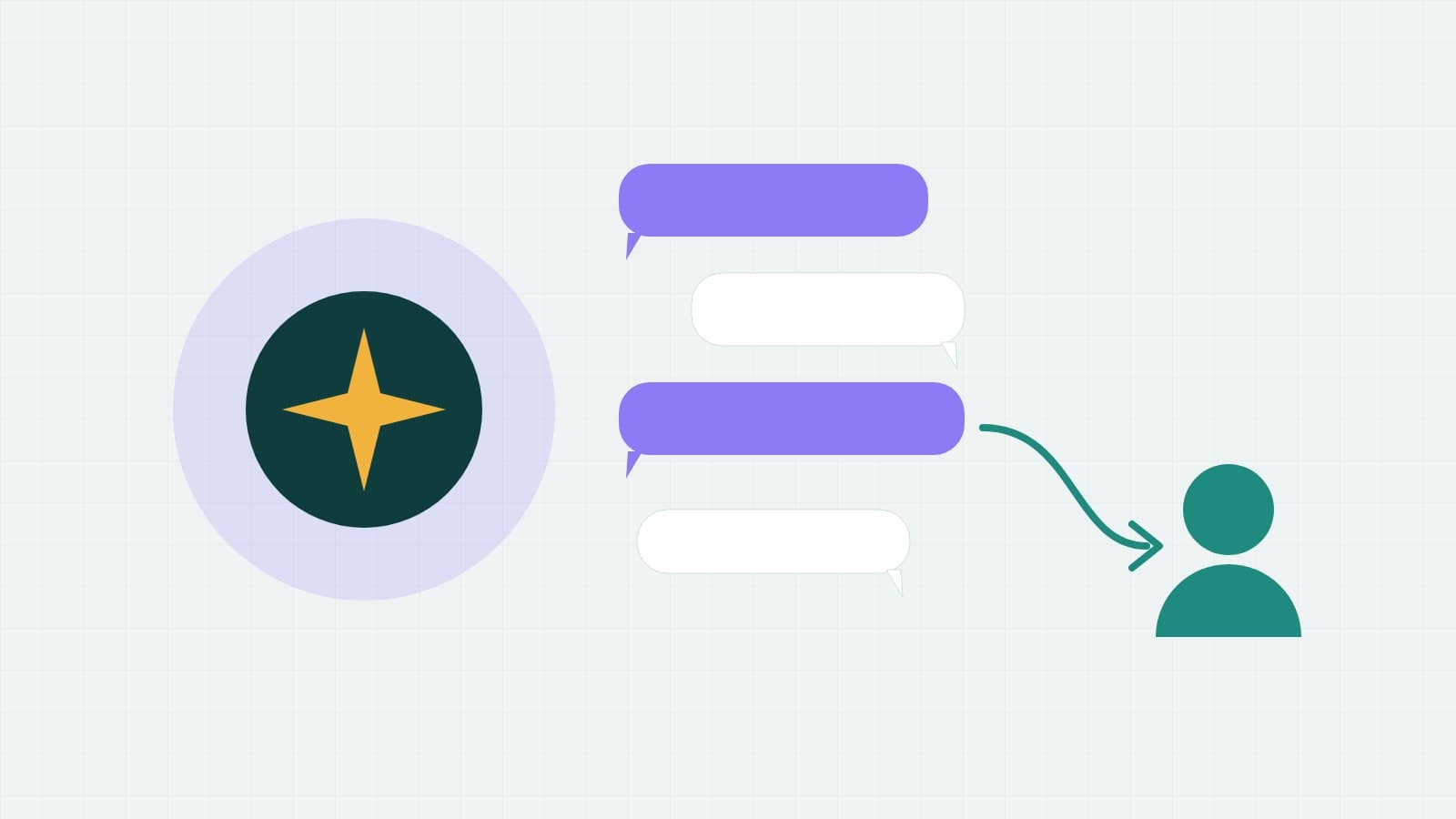
- AI 沒把握時:找不到相符的資料,或問題模稜兩可,應直接說「我請同事回覆您」。
- 客戶不滿或客訴:情緒性的訊息、重複詢問同一件事,代表自動回覆已經沒有幫助。
- 涉及金錢:退款、折讓、補償、價格例外,AI 可以說明流程,但核准與承諾要由人決定。
- 個人資料:查詢或修改個人資料、帳戶異動,要先確認身分,並由有權限的人處理。
- 法律與健康安全:合約爭議、法律責任、醫療或安全相關問題,不應由 AI 回答。
- 客戶主動要求:客戶說要找真人,就讓他找得到,不要讓人卡在選單裡。
轉接時最好把對話內容一起交給同事,客戶就不必從頭再講一次。
揭露、紀錄與定期檢查
清楚告知是 AI
在對話開頭說明「目前由 AI 助理回覆,可隨時轉真人」。客戶知道對象是 AI,期待就會比較合理,也比較願意在需要時要求轉接。
保留紀錄並抽查
保存 AI 的對話紀錄,每週抽查一部分,特別是被轉接、被客戶打低分或提到退款的對話。發現答錯時,先修正知識庫或規則,再觀察是否改善。紀錄中可能有個人資料,要限制查閱權限並訂好保存期限,遵守個人資料保護法。
上線後要看的指標
- 解決率:不需轉真人就解決的比例,但要搭配滿意度一起看,避免把「客戶放棄」誤算成「已解決」。
- 轉真人率與原因:哪些問題最常轉出去,代表知識庫哪裡要補。
- 答錯率:抽查時發現的錯誤回答比例,這是最重要的風險指標。
- 客戶滿意度:每次對話結束後簡單評分,並和真人客服比較。
- 重複詢問:同一位客戶短時間內又問同一件事,表示上一次並沒有真正解決。
常見問題
中小企業需要自己訓練模型嗎?
多數情況不需要。比較務實的做法是使用現成模型,搭配整理好的常見問題、價目與規定,讓 AI 只根據這些資料回答。把資料整理好,通常比換模型更有效。
AI 客服說錯話,公司要負責嗎?
從 Air Canada 的裁決來看,審裁處認為聊天機器人是公司網站的一部分,公司要為它提供的資訊負責。各國法律不同,具體情況請諮詢律師,但設計時應假設 AI 說的話就代表公司。
可以放在 LINE 官方帳號上嗎?
可以。透過 LINE Messaging API 串接 AI,一樣能設定轉真人的條件,並在官方帳號後台由同事接手。實際做法要看你使用的方案與既有系統。
結語
這四個案例放在一起看,結論其實很一致:讓 AI 處理有標準答案的重複問題,把判斷、承諾與情緒交給人,並持續檢查它說了什麼。建議從一小組最常被問的問題開始試行,確認答錯率夠低再擴大範圍。想了解我們怎麼規劃 AI 客服與轉接流程,可以參考AI 整合導入,也可以先讀中小企業導入 AI 與自動化的 5 個步驟。歡迎預約免費 30 分鐘諮詢,一起看看你的客服最適合從哪裡開始。
參考資料
- Klarna AI assistant handles two-thirds of customer service chats in its first month,Klarna,2024-02-27
- Klarna CEO says company will use humans to offer VIP customer service,TechCrunch,2025-06-04
- Klarna pursues 'Uber' style customer service model,CX Dive,2026-02-20
- Moffatt v. Air Canada, 2024 BCCRT 149,Civil Resolution Tribunal(卑詩省民事糾紛審裁處),2024-02-14
- Air Canada found liable for chatbot's bad advice on plane tickets,CBC News,2024-02-15
- Intercom case study,Anthropic(廠商客戶案例),2026-10(查閱日期)
- 台灣大哥大以AI 2.0技術優化智能客服機器人,提高對用戶提問的理解及回答正確率,iThome,2023-10-19
Generative AI has finally given customer service bots the ability to understand how people actually talk, and many business owners are wondering whether to let AI take the first pass at customer messages. Done well, AI support removes a mountain of repetitive work. Done badly, one wrong answer can turn into a refund, a complaint or even a legal claim. This article walks through four publicly documented cases, both successes and cautionary tales, and turns them into practical rules for small businesses: which questions to give AI, when a human must take over, and which numbers to watch after launch.
Klarna: big numbers, then a renewed focus on people
The cases below are public, documented examples, not Rejoicing Fountain clients; details are summarised from the references at the end.
In February 2024 the Swedish payments company Klarna announced that its AI assistant, powered by OpenAI, had handled 2.3 million conversations in its first month, about two-thirds of its customer service chats and the equivalent work of 700 full-time agents. Klarna said customer satisfaction was on par with human agents, repeat inquiries fell by 25%, and the time to resolve an errand dropped from around 11 minutes to under 2, across more than 35 languages. Notably, the release also said customers could still choose to talk to a live agent.
What happened next is just as instructive. TechCrunch reported in June 2025 that Klarna's CEO told SXSW London that AI can take away boring, routine work, but the company still wants to promise customers a human connection, and positioned human service as a premium tier. A February 2026 CX Dive report says the CEO acknowledged the company had leaned too heavily on cost, and that Klarna began hiring human agents again in May 2025.
Our reading: AI can absorb a large volume of simple questions, but "how many staff can we save" should never be the only yardstick. Being able to reach a person at any time is the floor for good service.
Air Canada: the bot got it wrong, the company paid
In November 2022, on the day their grandmother died, a Canadian traveller asked the chatbot on Air Canada's website about bereavement fares. The bot said they could buy a regular-fare ticket and apply for the reduced rate within 90 days of the ticket being issued. They did, only to be told that bereavement fares do not apply to completed travel; the correct rule was on a different page of the same website.
British Columbia's Civil Resolution Tribunal ruled in February 2024 (Moffatt v. Air Canada, 2024 BCCRT 149). Air Canada had suggested the chatbot was responsible for its own information; the tribunal member called this "a remarkable submission", holding that the chatbot is simply part of the airline's website and the company is responsible for everything on it, whether it comes from a static page or a bot. Customers, the decision noted, have no reason to know which part of a website is accurate. Air Canada was found liable for negligent misrepresentation and ordered to pay CA$812.02 in damages, interest and fees.
The amount was small, the lesson is not: what your AI tells customers may well be treated as what your company told them. Questions about refunds, prices and policies cannot be left to improvisation.
Intercom Fin: answers from your own knowledge base
Fin, the AI support agent from customer service software company Intercom, runs on Anthropic's Claude models. According to the customer story on Anthropic's site (checked October 2026), Fin answers from each company's own knowledge base, follows its tone and policies, and the vendor says its goal is for Fin to handle actions such as refunds. The page cites figures including resolving up to 86% of support volume and a 51% average out-of-the-box resolution rate across Intercom's customers.
These are vendor-reported figures whose definitions may not match your situation, so treat them as indicative. The gap between them is the interesting part: the same product produces very different resolution rates at different companies, and the difference usually comes down to how well the knowledge base is organised and how clearly the rules are written.
Taiwan Mobile: retrieve the answer, then respond
For a Taiwanese example, iThome reported in October 2023 that Taiwan Mobile's support chatbot handled around 420,000 questions a month with a satisfaction rate of about 95%, while roughly 1,500 human agents continued to provide round-the-clock service.
The most useful part of the report is how the team changed course. Their first attempt fed company data to a language model and let it answer directly, which produced wrong answers, because company data is a tiny fraction of what the model learned from. They switched to converting their knowledge base into vectors: the model interprets the customer's question, then the system returns the existing answer with the highest confidence rather than generating one freely. Taiwan Mobile said this roughly tripled answer accuracy on difficult questions.
What to let AI answer
Across these cases, AI does best with questions whose answer is already written down in your own material:
- Business basics: opening hours, address, directions, parking, contact details.
- Published policies: prices, payment options, delivery times, and explanations of the returns process.
- Products and services: specs, who it suits, common usage questions.
- Lookups and routing: pointing customers to the right form, page or next step.
The rule of thumb: let AI answer only from the FAQ and policies you provide, and never guess beyond them. When that material changes, update what the AI reads at the same time, so you never end up with two pages saying different things, as happened to Air Canada.
When a human must take over
- Low confidence: if there is no matching material or the question is ambiguous, the bot should say "Let me get a colleague to reply."
- Complaints and frustration: emotional messages or the same question asked repeatedly mean automation has stopped helping.
- Money: refunds, credits, compensation and price exceptions. AI can explain the process, but approvals and promises belong to people.
- Personal data: viewing or changing personal details or account settings needs identity checks and an authorised staff member.
- Legal, health and safety: contract disputes, liability, medical or safety questions should not be answered by AI.
- The customer asks: if someone wants a person, make that easy; never trap them in menus.
When handing off, pass the conversation history along so the customer does not have to start over.
Disclosure, logging and review
Say it is AI
Open the conversation with something like "You are chatting with our AI assistant; you can ask for a person at any time." When customers know they are talking to AI, their expectations are more realistic and they are more willing to ask for a hand-off when needed.
Keep logs and spot-check them
Store AI conversation logs and review a sample every week, especially conversations that were handed off, rated poorly or mention refunds. When you find a wrong answer, fix the knowledge base or rules first, then check whether things improve. Logs can contain personal data, so restrict access, set a retention period and follow Taiwan's Personal Data Protection Act.
Metrics to watch after launch
- Resolution rate: the share solved without a human, read alongside satisfaction so that customers giving up are not counted as "resolved".
- Hand-off rate and reasons: the questions most often passed on show where the knowledge base has gaps.
- Error rate: the share of wrong answers found in spot-checks; this is your most important risk metric.
- Customer satisfaction: a quick rating after each conversation, compared with your human agents.
- Repeat contacts: the same customer asking the same thing again soon after means the first answer did not really solve it.
FAQ
Does a small business need to train its own model?
Usually not. The practical route is an off-the-shelf model combined with a well-organised FAQ, price list and policies, with the AI restricted to answering from that material. Cleaning up your content tends to matter more than switching models.
Is the company responsible if its AI gives a wrong answer?
In the Air Canada decision, the tribunal treated the chatbot as part of the company's website and held the company responsible for its information. Laws differ by country, so ask a lawyer about your situation, but design on the assumption that whatever the AI says, your company said.
Can this run on a LINE Official Account?
Yes. Connecting AI through the LINE Messaging API still lets you define hand-off rules, with colleagues taking over from the Official Account console. The exact setup depends on your plan and existing systems.
Wrapping up
Taken together, these four cases point the same way: let AI handle repetitive questions that have a standard answer, leave judgement, commitments and emotions to people, and keep checking what the AI actually says. Start with a small set of your most frequent questions and expand only once the error rate is low enough. To see how we plan AI support and hand-off flows, read about our AI integration service, or start with 5 steps for small businesses to adopt AI and automation. Book a free 30-minute consultation and we will help you work out where your customer service should start.
References
- Klarna AI assistant handles two-thirds of customer service chats in its first month, Klarna, 2024-02-27
- Klarna CEO says company will use humans to offer VIP customer service, TechCrunch, 2025-06-04
- Klarna pursues 'Uber' style customer service model, CX Dive, 2026-02-20
- Moffatt v. Air Canada, 2024 BCCRT 149, Civil Resolution Tribunal (British Columbia), 2024-02-14
- Air Canada found liable for chatbot's bad advice on plane tickets, CBC News, 2024-02-15
- Intercom case study, Anthropic (vendor customer story), 2026-10 (date checked)
- Taiwan Mobile uses AI 2.0 to improve its support chatbot (in Chinese), iThome, 2023-10-19